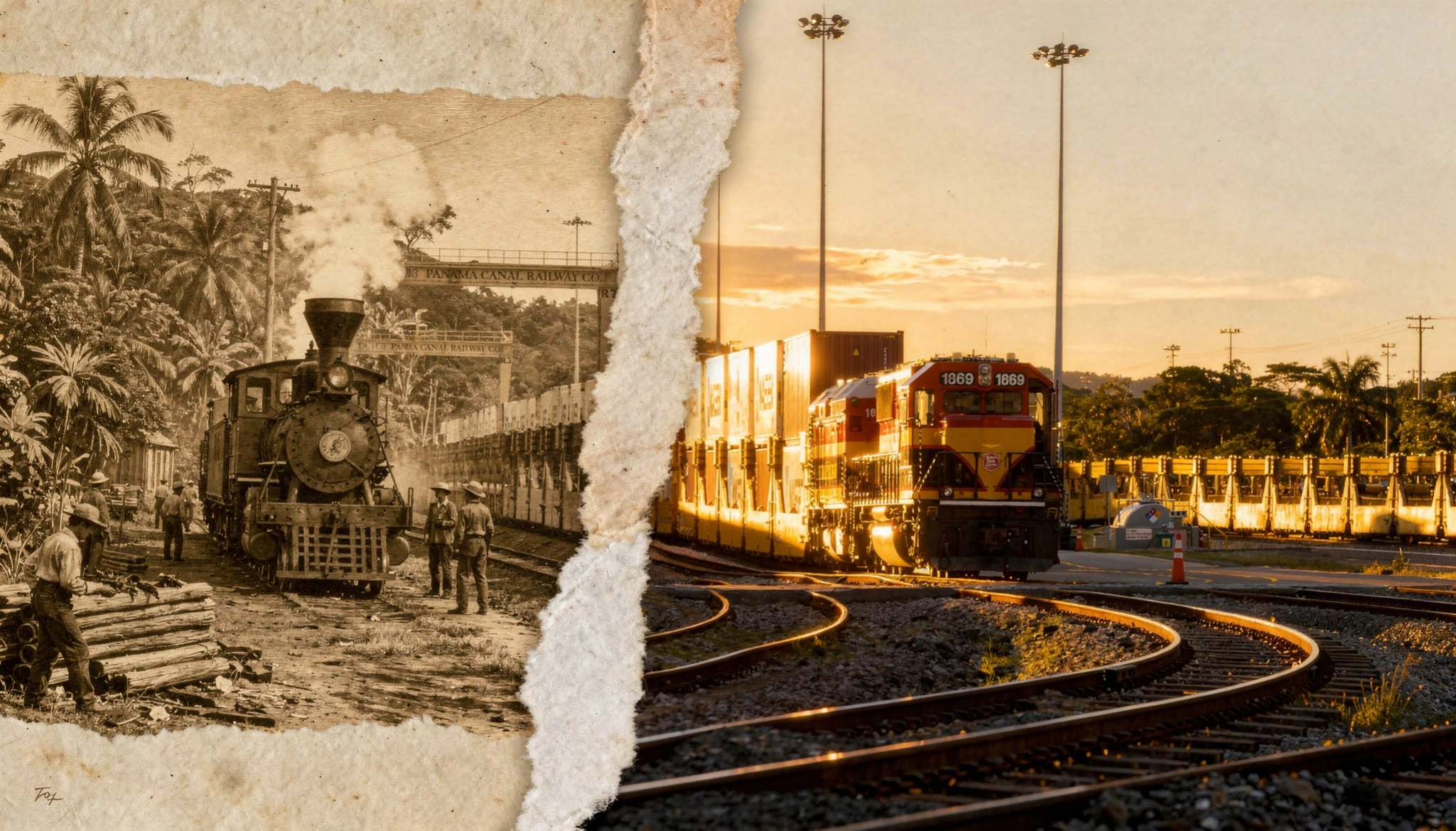
The World’s First
Transcontinental Railroad
A story of ambition, engineering, and perseverance that forever changed global commerce, half a century before the Canal.
The Origins
A Natural Route Between Two Seas
Since the Spanish arrived on the Isthmus in 1501, Panama has been the natural route for the transit of goods. In 1848, a charter was granted to the Pacific Mail Steamship Company, but it was the discovery of gold in California that same year which changed destiny forever.
The Construction
Struggle Against Jungle and Swamp
Construction officially began in August 1850. An epic battle against disease and swamps fought by thousands of workers.
October 1, 1851: First 8 miles completed.
January 28, 1855: First transcontinental crossing.
The Golden Era
The World’s Most Profitable Railroad
Between 1855 and 1867, it transported over $700 million in gold without losing a single shipment. Such was its success that in 1879, the French purchased the railroad for $25 million to support their failed attempt to build a canal.
The American Era
Key to the Panama Canal
The entire line was relocated between 1907 and 1912 to make way for Gatun Lake. Without the railroad to move excavated earth and supplies, the construction of the Canal would have been impossible.
The Rebirth
A New Vision
After reverting to Panama in 1979 and deteriorating, on February 18, 1998, the government granted the concession to the Panama Canal Railway Company. With an investment of $80 million, we transformed the historic route into the modern “Dry Canal” operating today.